





Introduction — Why Brittany’s Coastline Deserves the Trip
Brittany is a land of marine contrasts, a coastline carved by millennia of erosion, storms and shifting light. From wind‑blown headlands and sheltered coves to jagged cliffs and wave‑lashed islands, the Breton coast offers a range of destinations that will delight coastal hikers, maritime history buffs, seafood lovers and photographers alike. This guide highlights the 10 Brittany coasts and islands you shouldn’t miss, with practical details — exact addresses, indicative prices, opening hours, immersive descriptions and local tips — to help you plan a realistic, enjoyable itinerary.
The region’s diversity shows in the pink stones of the Pink Granite Coast, the wild moors of Cap Fréhel, the refined gardens of Île de Batz, the austere beauty of Ouessant and the gentle charm of the islands in the Gulf of Morbihan. Each spot offers a unique experience: lonely lighthouses, marked coastal paths (GR34), picturesque harbors serving oysters, fishing villages, fine sandy beaches and ocean views that take your breath away. Crossing times and fares vary by season and operator; we provide practical indications to make planning easier.
Whether you travel by car, train or ferry, Brittany is easy to reach from Paris and France’s major cities. Local tourist offices offer detailed maps, brochures and personalized advice — don’t hesitate to visit them for trail conditions and marine forecasts. Finally, respect local rules: nature reserves and protected zones often require caution (dogs on leads, no picking plants or entering sensitive habitats). With these practical tips and our recommendations, you’ll be able to enjoy every stop to the fullest.
1. Pink Granite Coast — Ploumanac’h and Perros‑Guirec
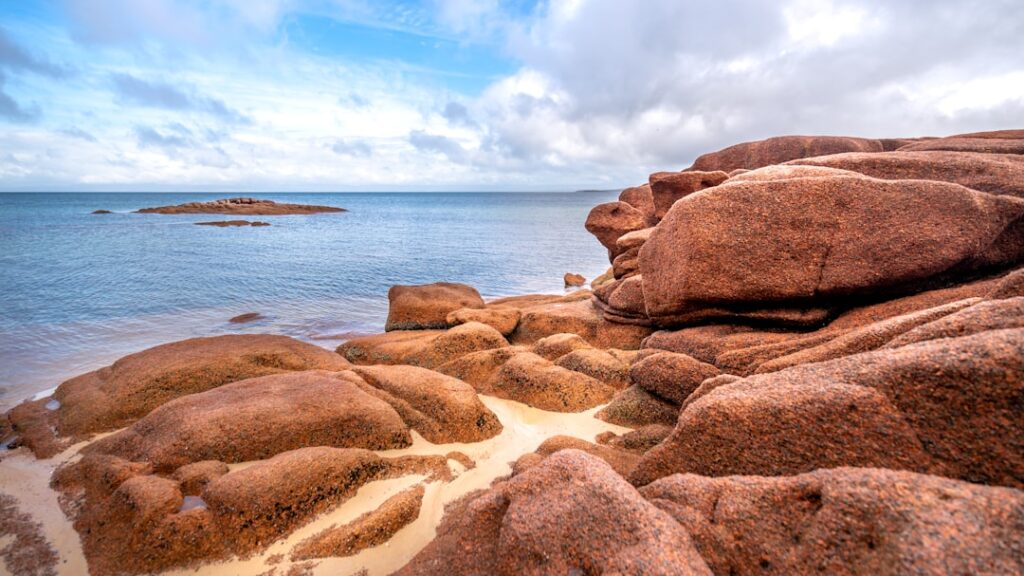
The Pink Granite Coast (Côtes‑d’Armor) is famed for its sea‑polished pink rocks. The iconic site is the village of Ploumanac’h, a hamlet of Perros‑Guirec, where the coastal path delivers spectacular views across domes and chaotic granite formations.
Exact address: Sentier des Douaniers, Ploumanac’h, 22700 Perros‑Guirec. Tourist office: Office de Tourisme de Perros‑Guirec, 13 Boulevard Garrec, 22700 Perros‑Guirec. Phone: +33 (0)2 96 23 48 48.
Opening hours: The coastal path is open at all times; the tourist office is usually open April–September from 9:30–12:30 and 14:00–18:30 (hours vary off‑season).
Price: Path access is free. Paid parking near the Ploumanac’h lighthouse — around €3 per hour in high season or day rates €8–12 depending on the car park.
Immersive description: walk here at first light when the low sun grazes the rocks and turns the granite shades of pink and orange. The shapes are fantastical: dome rocks, table‑like blocks, holes and arches. Waves crash at the base of the formations, creating foamy plays and salty spray scented with iodine and seaweed. The Mean Ruz and Ploumanac’h lighthouses frame the scene and are great photographic landmarks.
Local tips: arrive early to avoid the July–August crowds. Bring sturdy walking shoes, a windproof jacket and a water bottle. Seasonal buses serve Perros‑Guirec from nearby stations; consider parking further out and walking in to help preserve the site.
2. Cap Fréhel and Fort La Latte — Erquy / Plévenon
Cap Fréhel, located between Erquy and Plévenon in the Côtes‑d’Armor, is a dramatic promontory of pink sandstone cliffs and windswept heaths. Nearby, Fort La Latte, a medieval castle perched on a rocky spur, completes the experience.
Address: Cap Fréhel, 22240 Plévenon. Cap Fréhel car park: Route du Fort La Latte, 22240 Plévenon. Fort La Latte: Pointe de la Latte, 22240 Plévenon. Fort La Latte phone: +33 (0)2 96 41 99 58.
Opening hours: The cape is accessible at all times. Fort La Latte is open April–September, generally 10:00–18:00 (closing times vary in low season — check before you go).
Price: Cap access: free. Fort La Latte: adult ticket roughly €8–10, reduced €6–8, free for under‑5s (seasonal rates; tickets on site).
Immersive description: short grass and wind‑brushed heather rise more than 70 meters above the sea. The cliffs offer endless views across the English Channel, islands and neighboring headlands. In spring and summer, kites and gulls nest on the ledges; the sight and sound of waves battering the cliffs is powerful. Fort La Latte, with its round towers and keep, looks like a movie set and gives insight into the site’s strategic past.
Local tips: be prepared for strong winds — bring warm clothing even in summer. Expect paid car parks in high season (€3–6). Local operators run boat trips that take you to the foot of the cliffs (prices around €15–30 depending on duration).
3. Île de Bréhat — The Island of Flowers, Gardens and Trails
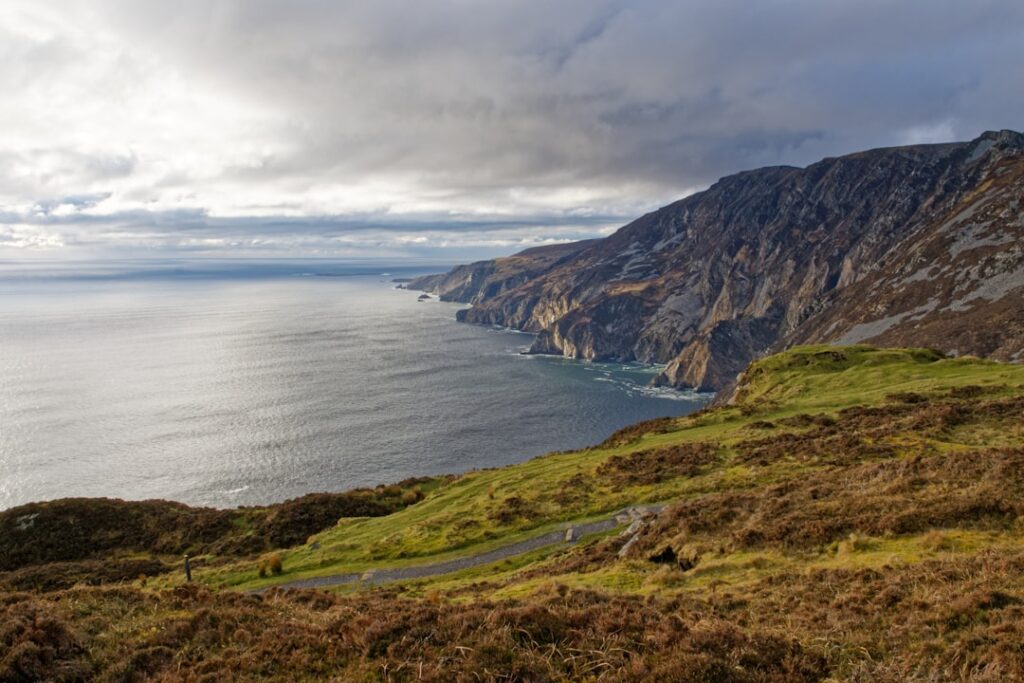
Île de Bréhat, in the Côtes‑d’Armor, is nicknamed “the island of flowers” thanks to its microclimate and Mediterranean‑style gardens. The island is flat — perfect for cycling and walking — and features coves, lighthouses and colorful fisherhouses.
Address & access: Port de l’Islet, 22870 Île‑de‑Bréhat. Boat company: Vedettes de Bréhat — Terrasses du Port, 22430 Ploubazlanec (Port de Pors‑Rolland). Phone: +33 (0)2 96 23 36 92.
Ferry schedule: Regular crossings April–October, roughly every 30–60 minutes depending on the season; first boats around 8:30, last around 19:00 (times vary).
Price: Return adult fare roughly €10–12 (2025 indicative rates), reduced rates for children; bicycles usually cost extra (about €3–5 per bike).
Immersive description: disembark at Port‑Clos or Le Pellinec and follow the paths to discover flowering gardens, island views and sea‑sculpted rocks. Small houses with painted shutters and narrow lanes give the place a gentle, lakeside feel. The scents of mimosas, agapanthus and laurels lend an unexpectedly Mediterranean air to this Breton isle.
Local tips: rent a bike (rental stands on arrival) to cover more ground; bring water and a helmet. Shops are open in season (bakery, crêperies). Stick to marked paths and avoid picking flowers in private gardens.
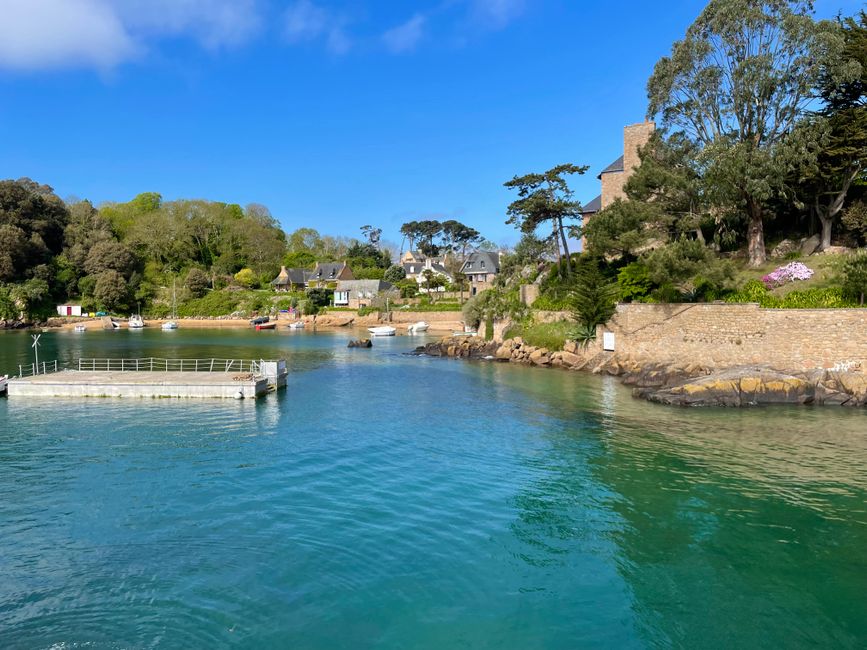
4. Belle‑Île‑en‑Mer — Le Palais, Sauzon and the Wild Coast
Belle‑Île‑en‑Mer, off the Quiberon peninsula (Morbihan), is the largest inhabited Breton island and offers a wide variety of landscapes: cliffs, sandy beaches, moorland and charming villages like Le Palais and Sauzon.
Address & access: Quiberon port (boarding), 56170 Quiberon. Transport: Compagnie Océane / BreizhGo — Quiberon boarding phone: +33 (0)2 97 30 42 67.
Ferry schedule: In summer crossings are frequent (every 30–90 minutes), first boats from about 7:00 and last often around 21:00 depending on the season; off‑season times vary.
Price: Return adult fare roughly €18–25 depending on operator and season; car fares vary (book in high season — roughly €60–80 return for a vehicle, depending on size).
Immersive description: Belle‑Île’s Wild Coast is a maze of cliffs and coves where wind shapes the moorland. Beaches like Grande Plage de Donnant draw surfers and sunbathers. Le Palais, the administrative center, has a lively harbor, fortifications and shops. Sauzon is quieter, with a soft light perfect for sunset and seafood tasting.
Local tips: follow the coastal trail for hiking and wear appropriate footwear — some stretches are exposed. If you plan to bring a car, book the ferry well in advance for summer. Try local specialties: cider, kouign‑amann and seafood platters at harbor restaurants (seafood platters typically €25–60 depending on selection).
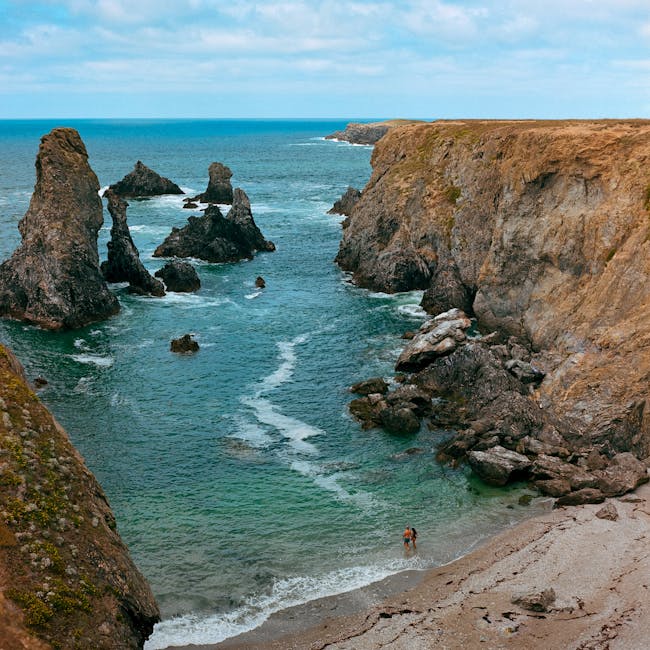
5. Île d’Ouessant — France’s Western Edge, Lighthouses and Wild Nature
Ouessant (Finistère) is metropolitan France’s westernmost island; it’s known for its stark landscapes, iconic lighthouses (notably Phare du Créac’h) and notable seabird populations. The island is part of a marine park and an ornithological reserve.
Address & access: Le Conquet port for boarding, 29217 Le Conquet. Companies: Penn Ar Bed (or other seasonal operators). Penn Ar Bed Le Conquet phone: +33 (0)2 98 48 33 33.
Hours: Regular crossings, first boats around 6:30–7:00 in high season, last departures vary; expect 1–1.5 hours at sea depending on conditions. Ouessant tourist office: Rue de la Mairie, 29242 Île‑d’Ouessant — opening times vary, usually open in season.
Price: Return adult fare roughly €30–45 depending on operator and season; reduced rates for children and residents. Island shuttles (bikes or minibus) cost extra.
Immersive description: the island is a patchwork of moorland, stony tracks and low houses with slate roofs. The Créac’h lighthouse, powerful and legendary, still guides mariners. Trails serve up dramatic Atlantic views and pebble beaches, and wildlife — seabirds and seals around the rocks — can often be spotted when weather allows.
Local tips: check ferry schedules and weather forecasts; crossings may be canceled in rough seas. Bring provisions and cash (some shops close early off‑season). Photographers will find morning light and golden hour especially rewarding.
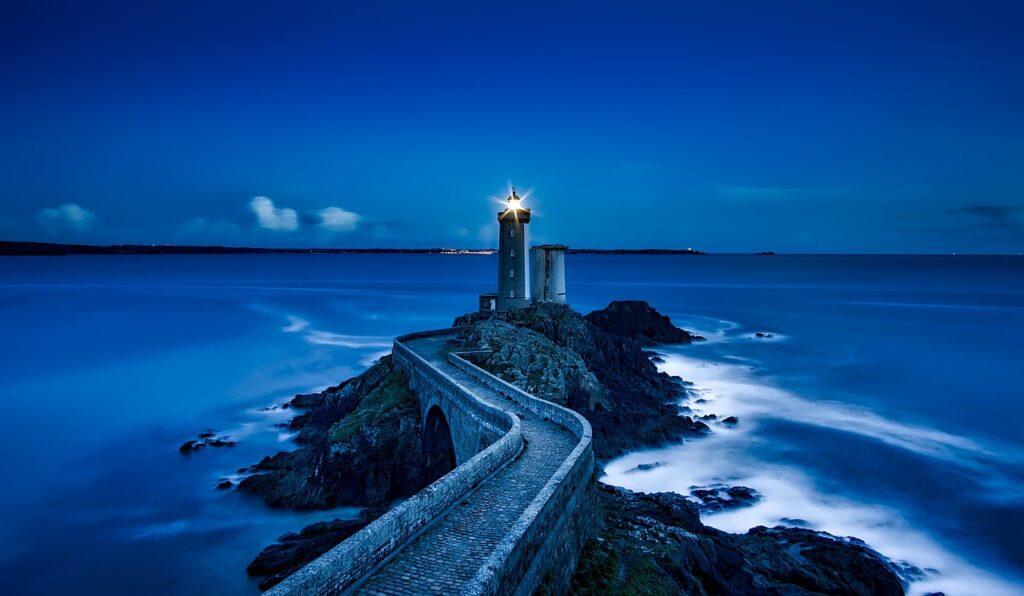
6. Île de Batz — Gardens and Simple Pleasures, Roscoff
Île de Batz, facing Roscoff (Finistère), is renowned for the Jardin Georges Delasselle, an exotic garden planted on granite terraces that benefits from a mild microclimate. The small island is ideal for walking and swimming.
Address & access: Boarding: Roscoff port, 29680 Roscoff. Ferry companies: Penn Ar Bed and others. Garden: Jardin Georges Delasselle, Île de Batz, 29730 Île‑de‑Batz. Garden phone: +33 (0)2 98 61 82 82.
Opening hours: Crossings every 30–60 minutes in season; summer times roughly 8:30–19:00. Jardin Delasselle open April–October, often 10:00–18:00.
Price: Return ferry roughly €8–12 adult; Jardin Delasselle entrance about €6–9 adult, reduced rates for children and seniors (seasonal prices).
Immersive description: terraces of palms, agaves, eucalyptus and colorful flowerbeds spill down toward views of Roscoff and the bay. The contrast between exotic vegetation and the Iroise Sea is striking. Coastal paths lead to sheltered beaches and coves perfect for swimming and snorkeling.
Local tips: combine the garden visit with a walk around the island (allow 2–3 hours on foot). Bring sunscreen and comfortable shoes; island services are limited off‑season. If you travel with a bike, check the extra boarding fee.
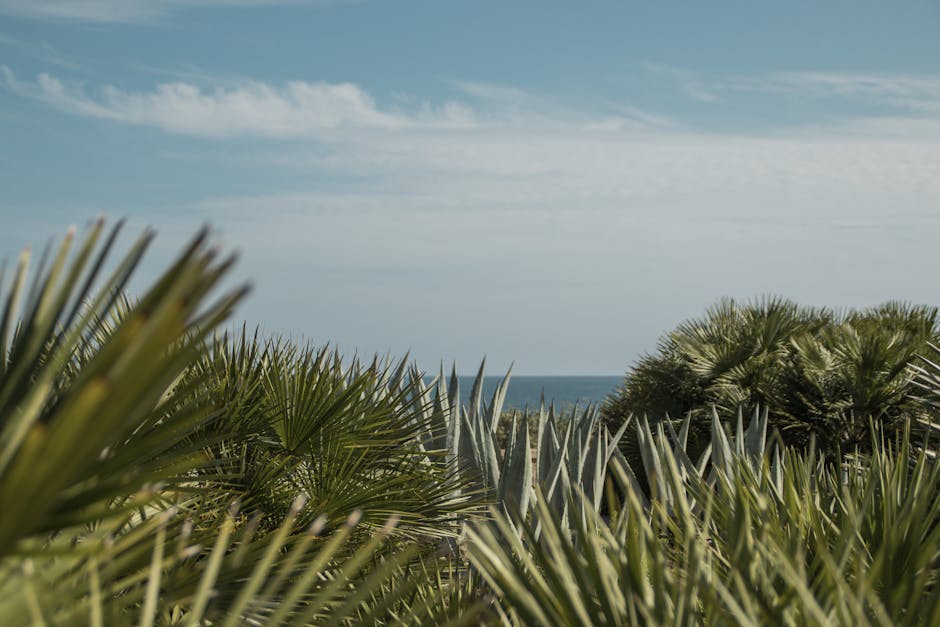
7. Île de Sein — A Small Island with a Big Maritime History
Île de Sein (Finistère) is tiny but steeped in history, notably from World War II when many islanders joined de Gaulle. The island offers absolute tranquility, with low stone houses and cobbled streets.
Address & access: Boarding: Audierne or Concarneau depending on season; Audierne port, 29770 Audierne. Companies: Vedettes Audiernaises / Penn Ar Bed — check seasonal departures.
Hours: Seasonal crossings, morning and afternoon services; expect 1–1.5 hours at sea depending on departure point and weather.
Price: Return adult fare roughly €25–40 (varies by embarkation point and season).
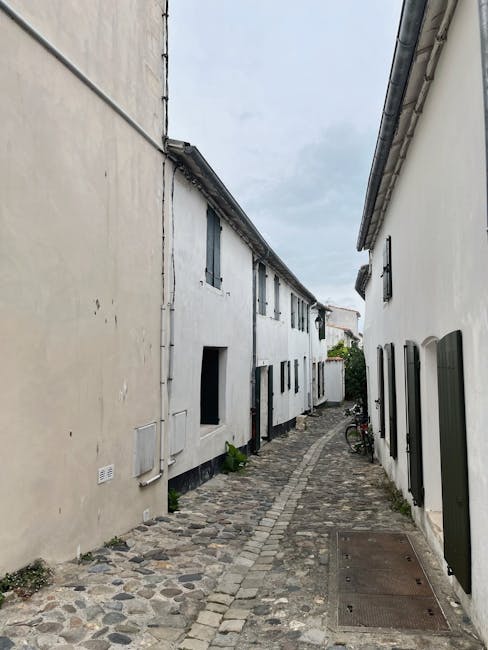
Immersive description: the island can be explored in an hour or two, but each lane and house tells stories of sailors and storms. Wide views over the Iroise Sea invite slow walking and birdwatching. Island life is paced by tides and fishing; hospitality is warm though services are limited.
Local tips: carry cash, as cards aren’t always accepted everywhere. Check boat times the day before departure. If the wind is strong, crossings can be choppy or canceled — build a buffer day into your plans.
8. The Gulf of Morbihan — Île‑aux‑Moines and Île d’Arz
The Gulf of Morbihan (Morbihan) is a sheltered marine area dotted with about a dozen inhabited islands and numerous islets. The best known are Île‑aux‑Moines and Île d’Arz, perfect for leisurely strolls, bike hires and oyster tastings.
Address: Frequent departures from Vannes, Port‑Maria, 56000 Vannes. Vannes tourist office: 2 Quai Monseigneur de Kerlo, 56000 Vannes. Phone: +33 (0)2 97 01 86 86.
Hours & prices: Shuttles to Île‑aux‑Moines and Île d’Arz: multiple daily departures; return fares roughly €8–15 adult depending on island and season. Early boats from about 8:30–9:00, evening return times vary.
Immersive description: Île‑aux‑Moines is known for its hedged lanes, small roads and intimate beaches. Île d’Arz is wilder, with sheltered anchorages and coastal paths ideal for observing marine life. In the gulf, the tide reshapes the landscape — sandbanks, channels and deep blue reflections on calm days.
Local tips: rent a bike to explore the islands; leave time to taste oysters with a local producer (a dozen oysters roughly €6–15 depending on size). In summer parking and ferry queues can be busy — go early or avoid weekends.
9. Crozon Peninsula — Anse de Pen‑Hir and Cap de la Chèvre
The Crozon peninsula (Finistère) packs wild scenery into a compact area: steep cliffs, Atlantic viewpoints, fine sandy beaches and wind‑blown capes. Anse de Pen‑Hir and Cap de la Chèvre deliver truly grand panoramas.
Address: Pointe de Pen‑Hir, 29160 Camaret‑sur‑Mer / Cap de la Chèvre, 29560 Crozon. Tourist office: Maison du Parc Naturel Régional d’Armorique, Rue du Général de Gaulle, 29160 Crozon. Phone: +33 (0)2 98 27 03 38.
Opening hours: Site access: always open. Tourist office: hours vary, often 9:30–12:30 and 14:00–18:00 in season.
Price: Free access. Paid parking possible in high season (€2–6 depending on site).
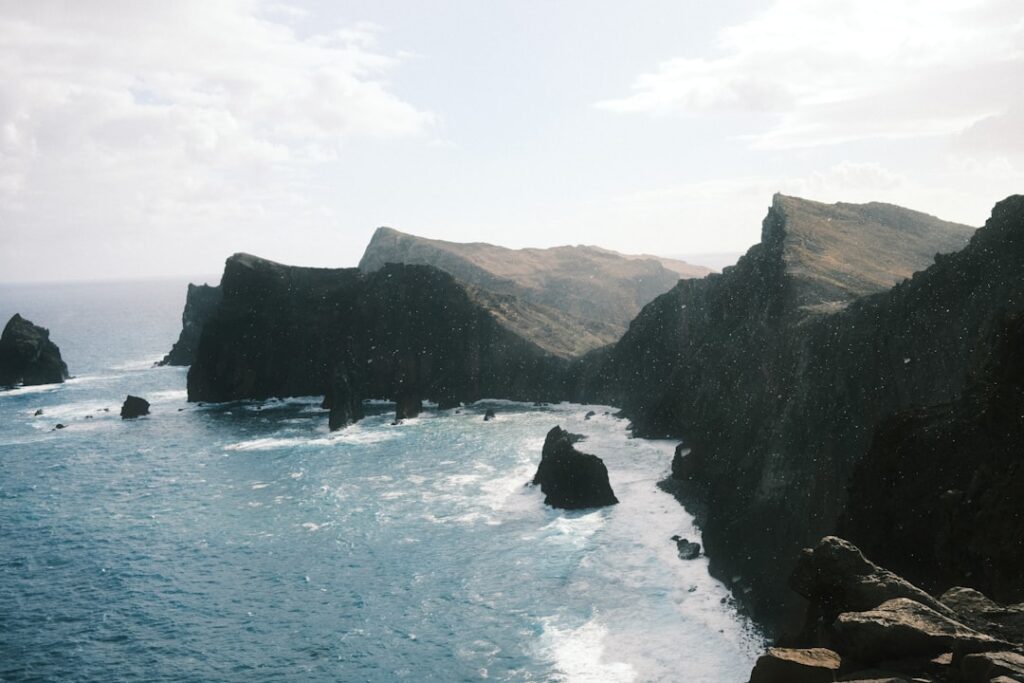
Immersive description: from Pen‑Hir the view opens onto a frequently turbulent sea, sculpted cliffs and isolated rock stacks. At low tide colors intensify; the sightline to Pointe de Corsen and nearby islands is impressive. Cap de la Chèvre, even more rugged, offers coastal walks filled with heather and saline scents.
Local tips: bring a topo map for long hikes; some areas aren’t fenced and cliff edges are dangerous. Expect strong winds and a windchill that can make temperatures feel much lower than forecast.
10. Quiberon’s Wild Coast and Peninsula — Beaches and Surf Spots
The wild coast of the Quiberon peninsula (Morbihan) is famous for its wind‑sculpted cliffs, huge beaches (Grande Plage, Quiberon Beach) and surfable waves. The coastal road offers striking views of the Atlantic.
Address: Côte Sauvage, Route de la Côte Sauvage, 56170 Quiberon. Quiberon tourist office: Place Hoche, 56170 Quiberon. Phone: +33 (0)2 97 30 06 61.
Hours: Site open at all times. Tourist and seasonal offices: hours vary, usually 9:00–18:00 in season.
Price: Beach access is free; parking often paid (€3–8 per day in high season). Surf schools: discovery lessons €30–50 (1.5–2 hours depending on package).
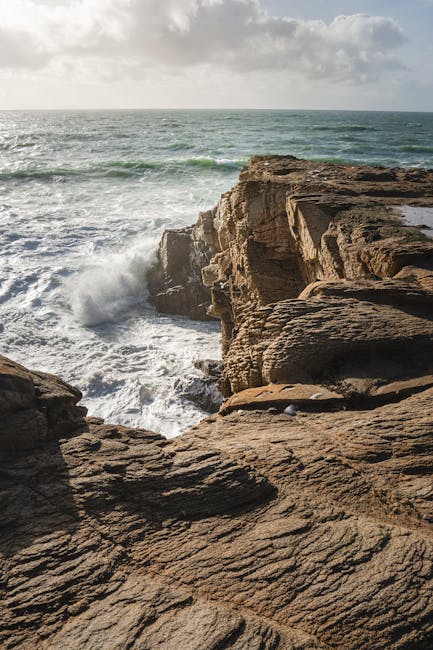
Immersive description: the coast alternates cliffs and coves with sea colors ranging from emerald to steel gray depending on weather. Wide sandy beaches are ideal for walking, kite‑flying and supervised swimming in summer. Surf spots welcome beginners and advanced riders, with local schools providing gear and guidance.
Local tips: check currents and supervised bathing zones before entering the water. In summer favor morning hours for tranquillity and good light. For seafood lovers the Quiberon markets sell fresh fish and shellfish (prices vary by catch — budget €10–30 for a fresh selection).
Conclusion — Planning Your Route and Final Tips
Brittany’s coastline is extraordinarily rich and ever‑changing: each site has distinct strengths, from the sculpted pink rock of the Pink Granite Coast to Ouessant’s wind‑beaten moors, via Île de Batz’s exotic gardens and the gentle islands of the Gulf of Morbihan. To make the most of your visit, here are some practical recommendations:
- Plan around the weather: light transforms the landscape; Brittany can switch from clear to misty or windy in a few hours. Check marine forecasts (Météo‑France) and adapt ferry crossings accordingly.
- Book ahead: in high season (July–August) reserve ferries and accommodation early, especially if you bring a vehicle. Crossings to Belle‑Île, Ouessant and other popular islands fill up fast.
- Respect the sites: some areas are protected (nature reserves, bird habitats) — stay on marked paths, don’t dig up plants and keep dogs on leads when requested.
- Pack appropriately: sturdy hiking shoes, a windproof, hat, sunscreen and a reusable water bottle are your best allies. Distances on islands can add up to hours of walking.
- Taste the local cuisine: crêperies, galettes, seafood (oysters, mussels, shellfish platters) and Breton pastries (kouign‑amann) are must‑tries. Prices vary: a sweet crêpe €3–6, a seafood platter €25–60 depending on the restaurant.
- Transport tips: favour car‑sharing or train to reduce parking stress, and use local buses and shuttles to reach ports. Many tourist offices provide free maps and advice.
Above all, give yourself time: the essence of Brittany reveals itself to travelers who pause to listen to the sea, watch the shifting sky and linger in harbors over a plate of oysters and a glass of cider. Each coast and island here offers a geographic, historic and sensory experience — plan around your interests (hiking, beaches, food, photography) and let each place surprise you with its own character. Safe travels and enjoy Brittany’s maritime treasures!